Skip hire and rubbish collection for Tottenham High Road N15
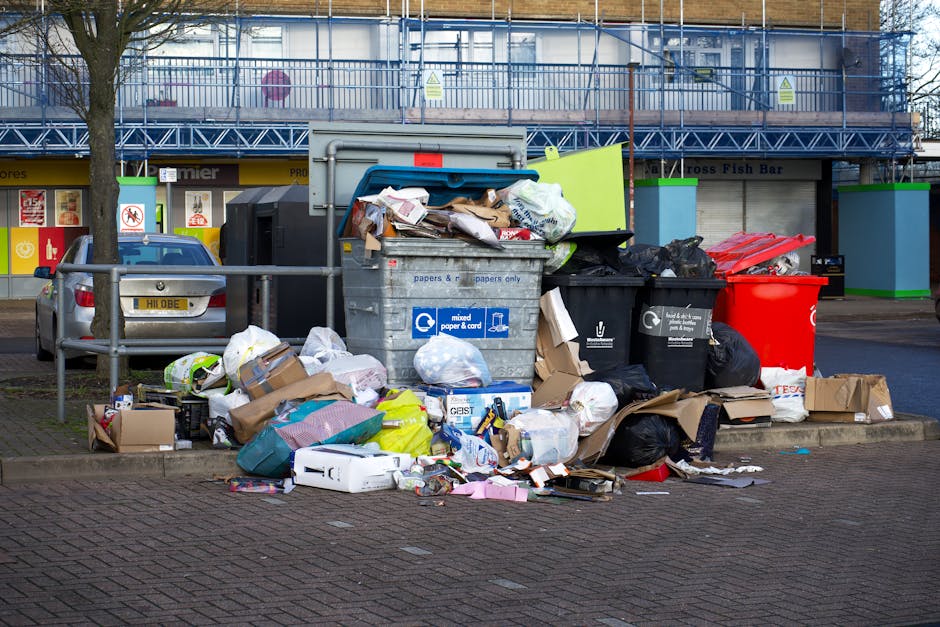
If you are trying to clear waste on or around Tottenham High Road N15, you probably want the same three things: a service that turns up when it should, enough capacity for the job, and no nasty surprises when it comes to access, permits, or disposal. Skip hire and rubbish collection for Tottenham High Road N15 can cover all sorts of jobs, from a flat clear-out above a busy parade of shops to builders' waste from a refurbishment near a narrow side street. The trick is choosing the right method for the waste, the street, and the time you actually have. That sounds simple enough, but in a busy part of North London, it rarely is.
In this guide, we will break down how the service works, when a skip makes sense, when rubbish collection is the smarter move, and how to avoid the common headaches that catch people out. You will also find a practical checklist, a comparison table, and a few real-world pointers that make the decision easier. No fluff. Just the stuff that helps.
Why Skip hire and rubbish collection for Tottenham High Road N15 Matters
Tottenham High Road is not the sort of place where waste disposal happens in a neat, open driveway with acres of space to spare. It is a lived-in, active stretch with shops, homes, flats, small businesses, and constant movement. That matters because waste removal is never just about getting rid of rubbish. It is about doing it without blocking access, creating complaints from neighbours, or leaving materials sitting around for longer than they should.
For domestic customers, the main issue is often space. A loft clearance, a kitchen rip-out, or a garden overhaul can create more waste than a couple of car loads can handle. For trades and site managers, timing becomes the bigger issue. If materials pile up, the job slows down. If waste is removed too early or too late, everyone has to work around it. And let's face it, nobody likes stepping over broken tiles, plasterboard, and dusty offcuts all day.
Local conditions also shape the decision. Busy roads, limited parking, loading restrictions, and shared access can all influence whether a skip, a grab-lorry collection, or a wait-and-load arrangement is best. In practice, the "right" option is the one that fits your waste volume and your street, not just your budget.
Expert summary: In a high-traffic urban area like Tottenham High Road N15, the best waste solution is usually the one that balances access, speed, and compliance. Cheap is useful; practical is better.
How Skip hire and rubbish collection for Tottenham High Road N15 Works
At a basic level, the process is straightforward. You tell the provider what type of waste you have, how much of it there is, where it is located, and how quickly it needs removing. Then the provider matches that to the most suitable method. That might be a standard skip, rubbish removal, a grab hire service, or a same-day option where speed matters more than long-term storage.
A skip is usually best when waste will be created over a few days and you need a container on site. Rubbish collection is more useful when you want waste taken away in one visit, or when access makes a skip awkward. For example, if a front pavement is narrow or parking is tight, a collection service can be a cleaner solution. If you are clearing a garage or renovating a room, a skip may be the better fit because it lets you keep loading as you go.
There is also a middle ground. A wait-and-load skip hire service can work well if you have enough waste ready in one go but cannot leave a skip on the road or outside the property for long. That is often a sensible choice on busier stretches where space is at a premium. Truth be told, it saves a lot of stress when access is unpredictable.
Some jobs call for specialist handling too. Construction-heavy waste may be better handled through builders skip hire or builders waste removal, while larger site work may need construction waste disposal or even site clearance. If you are dealing with bulky household items, specialist services such as mattress and sofa disposal or fridge and appliance removal can be a cleaner route than trying to piece everything into a mixed load.
Key Benefits and Practical Advantages
The strongest benefit is simple: waste disappears in a controlled, organised way. That sounds obvious, but when you are in the middle of a project, a clean site changes everything. You move faster, you work safer, and you stop wasting time deciding which bag goes where.
- Better site organisation: waste is contained rather than scattered across pavements, gardens, or hallways.
- Less disruption: the right collection method reduces the chance of access problems or blocked walkways.
- Faster project flow: trades can keep going instead of stopping every hour to deal with debris.
- Flexible for different waste types: mixed household rubbish, green waste, and construction debris can be handled in different ways.
- More predictable disposal: you are not left guessing what happens next or where the waste goes.
Another advantage that people sometimes underestimate is mental space. Once the waste plan is sorted, the job feels smaller. That is especially true for home clearances. A cluttered room can feel impossible at first; once the waste is collected, suddenly you can breathe again. That relief is real.
If your priority is convenience, look at domestic skip hire for household projects or house clearance where you want a fuller, more hands-off solution. If you need a secure container for sensitive items or dust-prone waste, enclosed and lockable skip hire may be worth considering. Not glamorous, but very practical.
Who This Is For and When It Makes Sense
This service is useful for a wide mix of people. Homeowners doing a clear-out. Landlords turning over a property. Builders working on a refurb. Office managers dealing with old furniture. Gardeners shifting soil, branches, and hedge cuttings. It is one of those services that quietly helps a lot of very different jobs.
It makes sense when waste volume is too much for council bins, too awkward for a personal vehicle, or too heavy to shift in repeated small trips. A few black bags? You probably do not need a skip. A full kitchen strip-out with tiles, cabinets, and plaster? That is a different story.
It also makes sense when time matters. For example, if a tenancy ends on Friday and you need the space ready for viewings by Monday, wasting half a day driving to the tip is not exactly ideal. Same goes for a shop refit on Tottenham High Road where the team needs the frontage clear before opening. In those moments, speed and reliability matter more than almost anything else.
For business users, commercial skip hire can support routine waste management, while office clearance may be more suitable if desks, chairs, filing, or old equipment need to go. If documents or confidential material are involved, confidential shredding is the safer choice. Better to plan that properly than try to improvise with standard mixed waste.
Step-by-Step Guidance
- Identify the waste type. Separate household rubbish, green waste, construction rubble, bulky items, and anything potentially hazardous. This first step saves mistakes later.
- Estimate the volume. Think in practical terms: one room, one garden, one strip-out, or one load of mixed renovation waste. If you are unsure, speak in simple descriptions rather than trying to be exact.
- Check access. Measure gate widths, look at parking, note any low branches, tight turns, bollards, or narrow pavements. The street can decide the method for you.
- Decide between skip hire and collection. If the waste will accumulate over time, a skip may suit you. If you want a quick clear-away, rubbish removal or grab hire may work better.
- Review permit needs. If a skip needs to go on the public highway, you may need a permit arrangement. It is one of those boring details that matters a lot.
- Book the right service. Use a provider that offers the right size and method. If speed is essential, look at same day skip hire.
- Load correctly. Keep waste level, avoid overfilling, and do not place prohibited items in the container. A tidy load is safer and easier to collect.
- Arrange final removal promptly. Do not let waste sit around once the job is finished. It creates clutter, risk, and frustration. Simple as that.
A useful habit is to sort waste before the vehicle arrives. A thirty-minute sort can save a much longer headache later. It is the sort of thing people only learn after one or two messy jobs, usually while standing in the rain with a pile of damp cardboard. Been there, regrettably.
Expert Tips for Better Results
One of the best tips is to think about waste in layers. Heavy inert waste, light mixed rubbish, and bulky furniture do not behave the same way in a skip or on a collection load. If you group them sensibly, you make loading easier and reduce the chance of wasted space.
For renovation work, keep plasterboard, timber, packaging, and rubble separate where possible. This is not always essential, but it often makes disposal simpler and more efficient. If the job is mostly demolition debris, a service like demolition waste removal may be a better fit than a generic collection.
Another good habit: choose the disposal method based on the constraint, not just the waste. If your main problem is storage space, a skip helps. If your main problem is immediate removal from a hard-to-access street, grab hire or man and van may be more efficient. If your main problem is noise, disruption, and neighbours walking past every ten minutes, you may want the quickest possible turnaround. That part matters more than people think.
It can also help to speak openly about awkward items. Do you have a fridge? Old sofa? A pile of mixed garage junk with a rusted bike and a broken lamp? Say so early. The clearer the description, the better the recommendation. Nobody needs a surprise on collection day.
For garden work, garden waste removal is often cleaner than mixing soil, branches, turf, and old fencing into a general load. For lofts, cupboards, and awkward storage spaces, garage and loft clearance is often the sort of service that takes the stress out of a job you have been putting off for months.
Common Mistakes to Avoid
The first mistake is underestimating how much waste you have. Almost everyone does this once. You look at a pile of rubble or furniture and think, "That will be fine." Then the pile seems to multiply overnight. The fix is to build in a bit of margin, not a lot, just enough.
The second mistake is ignoring access. In Tottenham High Road N15, a good waste plan can still fail if there is nowhere safe to place the container or vehicle. Check parking restrictions, street width, and whether loading can happen without causing a nuisance. If the answer is no, change the method before booking.
The third mistake is mixing in restricted waste. Hazardous items need separate treatment, and many people only learn this at the last minute. If you are dealing with chemicals, paint, or similar materials, use hazardous waste disposal rather than assuming it can go with everything else. That is one of those areas where "probably fine" is not a good strategy.
The fourth mistake is choosing based on price alone. Cheapest is tempting, naturally. But if the service is wrong for your access or waste type, the actual cost can end up higher once delays and re-handling are counted in. Nobody enjoys paying twice because the first plan looked neat on paper and messy in real life.
Tools, Resources and Recommendations
You do not need complicated tools to make a waste job go smoothly, but a few simple things help a lot.
- Tape measure: useful for checking gates, alleyways, and loading space.
- Basic bin bags or rubble sacks: helps separate lighter waste before collection.
- Gloves and sturdy footwear: especially important when handling broken materials or sharp edges.
- Phone camera: useful for sharing photos of the waste pile and access points before booking.
- Notebook or phone notes: handy for listing bulky items, estimated loads, and any awkward restrictions.
For guidance on what can and cannot go into a container, the page on what can go in a skip is a useful starting point. If you are trying to understand pricing structure before booking, skip sizes and prices gives you a better base for comparison than guessing. And if your job is part of a wider construction or commercial project, pricing and quotes can help you make a more informed decision.
For readers who care about what happens after collection, recycling and sustainability is worth a look. Waste management is not just about removal; it is also about what gets recovered, sorted, and kept out of landfill where possible. That bit often gets overlooked.
Law, Compliance, Standards, or Best Practice
Waste disposal in the UK comes with responsibilities, even when the job is small and domestic. The exact obligations can vary depending on the waste type, where it is placed, and whether the load contains commercial or hazardous materials. So the safe approach is to follow accepted best practice, keep loads honest, and use the right collection route for the waste involved.
If a skip needs to sit on a public road, permit considerations may apply. If the load includes hazardous waste, it needs separate handling. If the waste comes from a business or construction activity, records and duty-of-care expectations become more important. You do not need to become a legal expert for a house clearance, but you do need to avoid casual assumptions. That is the point.
Good practice is fairly straightforward:
- describe the waste accurately
- do not overfill the container
- keep restricted items separate
- choose a service suited to the access conditions
- confirm whether a permit is needed before placing a skip on public land
- keep any relevant paperwork or booking confirmation for reference
If you are unsure, it is better to ask up front than to guess. A five-minute conversation usually prevents a five-hour problem.
Options, Methods, or Comparison Table
Choosing between skip hire and rubbish collection for Tottenham High Road N15 is usually about access, timing, and waste volume. Here is a simple comparison that should help.
| Option | Best for | Strengths | Possible limitations |
|---|---|---|---|
| Standard skip hire | Ongoing clear-outs, renovations, garden jobs | Lets you load over time, convenient for larger jobs | Needs space; may require permit if placed on the highway |
| Rubbish collection | One-off clearances, bulky mixed waste, fast removal | Quick, tidy, ideal for access-sensitive streets | Usually less flexible if waste is still being generated |
| Grab hire | Large loose waste, soil, rubble, bulky pile clearance | Good for heavy loads and awkward access | Needs room for the vehicle and load placement |
| Wait-and-load | Road restrictions, short loading windows, tight urban spaces | No long-term skip on site, reduced street disruption | Requires waste to be ready when the vehicle arrives |
| Man and van | Smaller jobs, mixed household items, quick uplift | Flexible and often efficient for compact loads | Not always ideal for large rubble-heavy projects |
In practical terms, if your waste is building up over several days, skip hire usually wins. If you need the clutter gone in a single sweep, rubbish collection or grab hire often makes more sense. If the street is the problem, not the waste, then the method has to fit the street first.
Case Study or Real-World Example
Imagine a small terrace property near Tottenham High Road with a kitchen being replaced and a hallway cupboard being cleared at the same time. There is old cabinetry, broken tiles, packaging, and a few bulky bits that are too awkward for ordinary bins. The front area is tight, with limited space for a long-term container and on-street parking that changes through the day.
In that situation, a standard skip might work only if there is legal placement space and enough room for delivery. But if the homeowner wants the waste gone on the same day, a collection-based service can be cleaner. The team can arrive, load the waste, and leave the frontage usable again. No waiting around, no pile sitting there for two days, no "we'll sort it later" moment that turns into a week.
Now imagine a builder on a longer refurb with timber, plaster, and rubble arriving in waves. Here, a skip is often better because the crew can keep loading as work progresses. The job stays tidy and no one has to stop work just to bundle waste for immediate removal. Two very different situations. Same street. Different solution.
That is the real lesson: the best waste option is shaped by the project, not just the postcode.
Practical Checklist
Use this before you book:
- Have I identified the waste type clearly?
- Do I know whether it is mixed, bulky, heavy, green, or hazardous?
- Have I estimated the amount honestly, with a bit of extra room?
- Is there safe access for a skip or collection vehicle?
- Would a short-term uplift, skip hire, or wait-and-load service be the better fit?
- Do I need to check for a permit if the skip is going on the road?
- Are there any restricted items I need to keep separate?
- Have I checked the timing so the waste is ready when the vehicle arrives?
- Do I need a specialist service for appliances, furniture, or confidential material?
- Am I clear on the quoted price, collection timing, and loading rules?
If you can tick most of those off, you are in a good place. If not, pause and sort the details first. A little planning now saves a lot of hassle later.
Small takeaway: waste management works best when the service fits the street as well as the job. On Tottenham High Road, that practical detail is often the difference between a smooth day and a chaotic one.
Get a free quote today and see how much you can save.
Conclusion
Skip hire and rubbish collection for Tottenham High Road N15 is not really about waste alone. It is about choosing a method that respects the space you have, the time you have, and the kind of job you are actually doing. Sometimes a skip is the obvious answer. Sometimes it is not. Sometimes the smartest move is a fast collection, a wait-and-load solution, or a specialist removal for awkward items.
The good news is that once you look at the practical side properly, the choice becomes much easier. Match the waste to the access. Match the timing to the project. Match the service to the real-world constraints, not the ideal version in your head. That is where the smooth jobs come from.
If you are planning a clear-out, refurb, or site tidy-up, take a moment to think it through before the waste starts piling up. It makes the whole day calmer. And honestly, calmer is underrated.
Frequently Asked Questions
What is the best option for skip hire and rubbish collection for Tottenham High Road N15?
The best option depends on how much waste you have, how quickly it needs to go, and whether there is enough access for a skip or collection vehicle. For ongoing jobs, skip hire is often best. For one-off clearances, rubbish collection can be quicker and easier.
Do I need a permit for a skip on Tottenham High Road?
If the skip has to sit on public land, a permit may be needed. If it can go entirely on private property, that may not apply. The safest approach is to check before booking rather than assuming it will be fine.
Is rubbish collection better than a skip for a narrow street?
Often, yes. On tight or heavily parked streets, collection-based services can be more practical because they avoid leaving a container in place. That said, it depends on the amount and type of waste.
Can I mix household rubbish and builder's waste?
Sometimes mixed loads are accepted, but it depends on the waste type and how it is described. Heavy rubble, timber, plaster, and general household rubbish are not always treated the same way, so it is best to be clear about the mix.
What happens if I overfill a skip?
Overfilled skips are usually not safe or acceptable for collection. Waste should sit level with the top edge unless the provider says otherwise. If you suspect you will have too much, book a larger size or use an alternative method.
How quickly can rubbish be collected in Tottenham High Road N15?
Timing depends on availability and the size of the job. Some services are same-day, while others may need a scheduled slot. If speed matters, ask about same-day options early.
What is the difference between grab hire and skip hire?
Grab hire uses a vehicle that can load loose waste quickly, which is useful for rubble, soil, and larger clearances. Skip hire gives you a container on site so you can load over time. The right choice depends on access and how the waste is generated.
Can furniture and appliances be taken away with rubbish collection?
Yes, often they can, provided the items are suitable for the service. Bulky items such as sofas, mattresses, fridges, and other appliances may need a specialist uplift or separate handling.
Is hazardous waste allowed in a normal skip?
No, hazardous waste should be handled separately. That includes items that need special treatment or controlled disposal. If in doubt, keep it out of the general load and ask for the right disposal route.
How do I choose the right skip size?
Think about the kind of project, the amount of waste, and whether the material is bulky or heavy. A small loft clear-out needs a very different setup from a full refurbishment. If you are unsure, it is usually better to ask for guidance than guess.
What should I do to prepare before collection day?
Sort the waste, keep pathways clear, remove anything that should not go in the load, and make sure access is ready. If the vehicle cannot reach the waste easily, collection gets slower and more awkward than it needs to be.
Is skip hire or rubbish collection cheaper?
There is no single answer. Skip hire can be cost-effective for ongoing projects, while rubbish collection can be better value for quick one-off removals. The cheapest option on paper is not always the cheapest once access, time, and convenience are considered.
If you are still weighing up the options, start with the access and the waste type. Once those two are clear, the right service usually reveals itself.